- Neuroglobe Brain Health
- Posts
- The Neuroscience of Strong Relationships
The Neuroscience of Strong Relationships
How Savoring Happy Moments Rewires the Brain
In partnership with

Why Burned-Out Professionals Are Turning to CBD
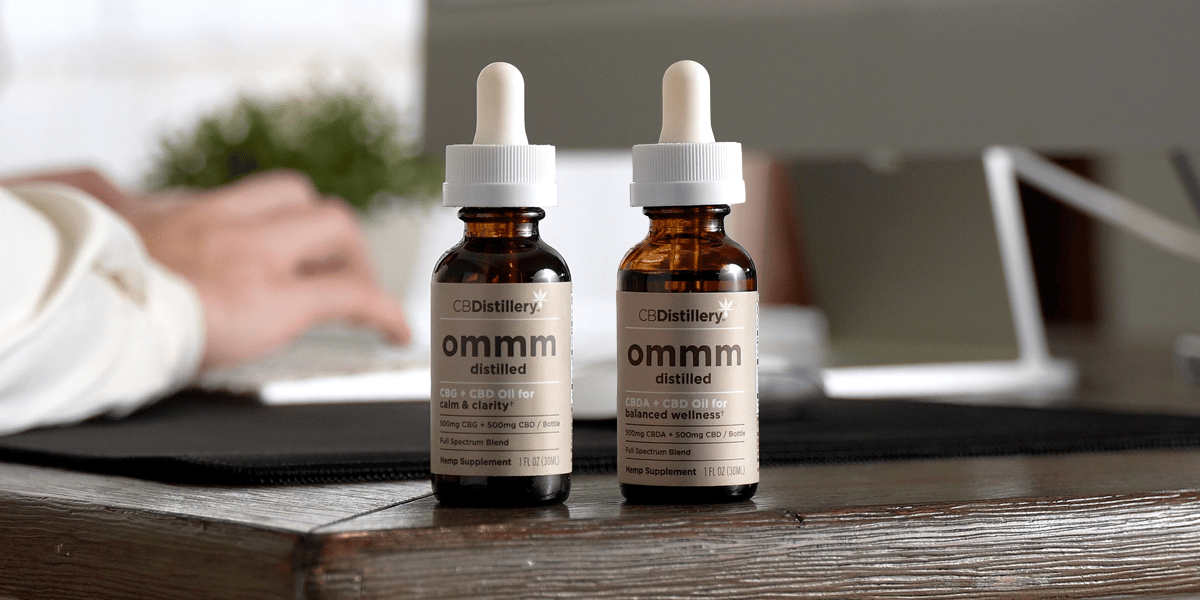
Long hours, heavy workloads and frustrating coworkers: job burnout is on the rise. Savvy professionals are turning to CBD and its sister compound, CBG, to manage work stress and burnout without losing focus.
Like CBD, CBG is a non-intoxicating compound found naturally in the hemp plant that is known for helping to manage mild/temporary anxiety. And these benefits are backed by science: participants in a 2022 CBDistillery study who took CBD + CBG reported:
Reduced mild or temporary anxiety and tension
Increased focus and mental clarity
That CBD + CBG was more effective than other treatments they tried in the past
When it comes to quality CBD products, CBDistillery is leading the way. Non-GMO, US-grown hemp, 100% clean ingredients, and a 60-day satisfaction guarantee give you one less thing to stress about.
Special Deal for Our Readers: Use code FOCUS to save an additional 20% on your first bundle order!
Introduction
Most people believe relationships are shaped by big moments: major decisions, conflicts, milestones. But the brain doesn’t operate that way. It is shaped by repetition, not intensity. What matters most is how everyday experiences are processed, stored, and revisited over time.
A recent study published in Contemporary Family Therapy analyzed 589 individuals to examine a specific behavior called joint savoring, the act of couples intentionally focusing on and appreciating positive experiences they share. The findings were clear: couples who engage in this process report stronger relationships, greater confidence in their future, and lower levels of conflict, even after accounting for personality, optimism, and stress.
This positions joint savoring as something more than a mindset. It is a measurable behavioral process that shapes how the brain encodes a relationship, and how that relationship functions over time.
What the Research Showed
The data reveals a consistent pattern. Individuals who scored higher in joint savoring reported significantly greater relationship satisfaction and relationship confidence, alongside reduced communication conflict. These associations remained statistically significant even when controlling for general savoring, optimism, perceived stress, and multiple demographic variables.
This distinction is critical. The effect is not explained by simply being a positive person or having a favorable disposition. It reflects a specific interpersonal behavior, how couples engage with positive experiences together.
At the individual level, joint savoring was also associated with improvements in quality of life, though its effects on broader health and psychological distress were more selective. This suggests that the primary impact of joint savoring is relational first, with secondary spillover into individual well-being.
The implication is precise: how couples process positive experiences together is not trivial, it is directly linked to measurable differences in relationship outcomes.
Mechanisms & Neuroscience
Reward System Reinforcement
When a positive experience is revisited, especially in detail, the brain does not treat it as a passive memory. It partially reactivates the original emotional state, engaging dopaminergic pathways associated with reward.
In joint savoring, this process becomes amplified. The partner is not just present in the memory, they are central to it. Each shared reflection strengthens the association between the partner and reward signaling in the brain, particularly across pathways linking the ventral tegmental area (VTA), nucleus accumbens, and prefrontal cortex.
Over time, this creates a reinforcement loop: the brain begins to encode the partner as a predictable source of reward, increasing attraction, motivation, and emotional investment.
Memory Consolidation & Relationship Schemas
Every relationship is filtered through internal models, what psychology refers to as schemas. These are built through repeated memory encoding, primarily involving the hippocampus and prefrontal cortex.
Joint savoring strengthens positive memory consolidation. When couples repeatedly revisit shared positive experiences, those memories become more accessible, more detailed, and more dominant in recall.
This shifts perception. In ambiguous situations, the brain relies on stored patterns. A relationship built on reinforced positive encoding is more likely to interpret a partner’s behavior as supportive rather than threatening.
This is why joint savoring is linked to lower conflict. It is not preventing disagreements, it is changing how those disagreements are interpreted at a cognitive level.
Stress Buffering & Threat Regulation
Under stress, the brain prioritizes threat detection. The amygdala becomes more reactive, and individuals default toward defensive interpretations, criticism, withdrawal, or conflict escalation.
Joint savoring counteracts this by raising the baseline of positive emotional encoding. Instead of entering stressful situations from a neutral or negative baseline, the brain draws from a reservoir of positive associations tied to the partner.
This alters the response. The same stressor produces less threat reactivity and more stability in behavior. The study reflects this directly: higher joint savoring attenuates the negative impact of perceived stress on relationship outcomes.
In practical terms, this is a buffering system. The relationship becomes more resilient under pressure, not because stress disappears, but because the brain processes it differently.
Strong relationships depend on one core variable: perceived partner responsiveness, the sense that your partner understands, values, and supports you.
Joint savoring strengthens this perception. When partners actively engage with positive shared experiences, they signal attention, validation, and emotional presence.
This activates bonding systems associated with oxytocin and social synchronization. Over time, this builds attachment security, making the relationship feel stable, predictable, and safe.
The key distinction is that this is not an individual process. It is inherently interactive. The benefits emerge because both individuals are participating in the same emotional and cognitive loop.
This is why joint savoring produces effects beyond general positivity, it operates at the level of shared neural and psychological alignment.
Practical Applications for Brain Health
The implications are direct and actionable.
First, positive experiences need to be actively revisited, not just experienced. The brain prioritizes what is rehearsed. Without deliberate reflection, even meaningful moments fade quickly from memory encoding.
Second, the process must be shared. Talking through positive experiences, reliving details, and reinforcing what made the moment meaningful transforms individual emotion into a mutual neural imprint.
Third, consistency matters more than intensity. Small, frequent moments of joint reflection are more effective than occasional large events. The brain adapts to repeated input, not isolated peaks.
Fourth, timing plays a role. Re-engaging with positive experiences shortly after they occur, and again later, strengthens consolidation and recall.
At a cognitive level, this process reshapes perception bias, improves emotional regulation, and stabilizes responses under stress. At a relational level, it strengthens the long-term structure of the bond.
This is not advice, it is a direct application of how memory, reward, and social bonding systems function.
The Bottom Line
Relationships are not primarily shaped by what happens, they are shaped by how the brain encodes and revisits what happens.
Joint savoring is a mechanism that trains the brain to associate a partner with reward, safety, and stability. Over time, this shifts perception, reduces conflict, and increases resilience under stress.
The strongest relationships are not built on constant positivity. They are built on the consistent reinforcement of what is already good, until the brain begins to treat that pattern as the default.
Reference
Joint Savoring in Romantic Relationships: Correlates and Protective Effects
Contemporary Family Therapy
DOI: 10.1007/s10591-025-09769-5
Social Bonding & Attachment Systems